 12-Day Best of Italy
 The White Lotus Experience
 Southern Thrills
 Tuscan Coastal Escape
 E-Bike Holiday in Tuscany
 Tuscany
 Sicily
 Amalfi Coast & Naples
 Puglia & Calabria
 Dolomites, Verona & Venice
 Italian Lakes
 Umbria
 Cinque Terre
 Food & wine
 Honeymoons & romance
 First trip to Italy
 Family & multigenerational
 Luxury private tours
 Private groups
 Day experiences
 Private, group or DIY?
 Driving in Italy
Quick answer: Dolomites vs Swiss Alps comes down to the landscape you want. The Dolomites give pale rock towers, high meadows, mountain huts and Italian food, close to Venice and Verona. The Swiss Alps give glaciers, peaks above 4,000 m and scenic trains. Switzerland is easier by train but costs more. With 10 days, do both from Milan.
| Dolomites (Italy) | Swiss Alps | |
|---|---|---|
| Highest peak | Marmolada, about 3,300 m | Dufourspitze, 4,634 m; Matterhorn about 4,480 m |
| Landscape | Pale limestone and dolomite towers, high meadows | Glaciated peaks, Aletsch Glacier about 23 km long |
| UNESCO | Since 2009, nine mountain systems | Jungfrau-Aletsch since 2001; Albula/Bernina railway since 2008 |
| Best for hiking | Hut-to-hut routes such as Alta Via 1, day hikes from lifts | Walks reached by train and cable car, glacier views |
| Getting around | Car or private driver; some roads and car parks need booking | Trains, buses and lifts; car-free Zermatt |
| Sample costs | Ortisei cable car about €74 return; Tre Cime toll €40 per car | Swiss Travel Pass 3 days CHF 254; Jungfraujoch from CHF 129.60 |
| Currency and phones | Euro; EU roaming rules apply | Swiss franc; often outside EU roaming |
| Easiest gateway | Venice or Milan | Zurich or Milan |
Are the Dolomites or the Swiss Alps better?
Neither range is better across the board; they suit different trips. Choose the Dolomites for pale rock towers, high meadows, Italian food and an easy link to Venice and Verona. Choose the Swiss Alps for glaciers, 4,000 m peaks and scenic trains. With 10 days or more in northern Italy, you can see both from Milan.
Here is how we would split it for most American travellers:
- Pick the Dolomites if you want dramatic walking with a long lunch at a mountain hut, a driver who can reach trailheads, and the mountains as one part of an Italy trip with Venice, Verona or the lakes.
- Pick the Swiss Alps if your picture of the Alps is ice and snow on very high summits, you love trains, or you want to ride to a glacier viewpoint without hiking.
- Do both if you have 10 days or more in northern Italy. Milan sits between the two, so one trip can cover both.
Our private Dolomites, Verona and Venice tours show how the Italian side fits a wider route; the sections below compare scenery, hiking, cost and getting around.
How is the scenery different in the Dolomites and the Swiss Alps?
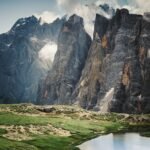
The Dolomites are pale limestone and dolomite rock towers rising from green valleys, with the highest peak, Marmolada, at about 3,300 m. The Swiss high Alps are glaciated summits above 4,000 m: Dufourspitze reaches 4,634 m and the Matterhorn about 4,480 m, so the top Swiss peaks stand roughly 1,300 m higher.
Both are UNESCO World Heritage Sites, for different reasons.
- The Dolomites were inscribed on 26 June 2009 as nine separate mountain systems divided by valleys, covering 141,903 hectares with 18 peaks above 3,000 m. The look is vertical: spires, cliffs and wide alpine pasture below them. Alpe di Siusi, often called Europe’s largest high-alpine meadow, sits right under the rock walls.
- The Swiss Alps Jungfrau-Aletsch area became a UNESCO site in 2001 (extended and renamed in 2007), the first natural World Heritage Site in the Alps. It holds the Aletsch Glacier, the largest glacier in the Alps at about 23 km long and up to 900 m deep. The Jungfraujoch railway, completed in 1912, climbs to a station at about 3,454 m.
In short: the Dolomites feel close and sculpted, with colour on the rock at sunset. The Swiss high Alps feel bigger and colder, with ice in view.
Dolomites vs Swiss Alps for hiking: which is better?
For hut-to-hut walking and varied day hikes from one base, the Dolomites are hard to beat, with famous routes such as the Alta Via 1. Switzerland is stronger for walks you reach by train and cable car, and for glacier views. Both have trails for every level, so pick by the landscape you want around you.
Hiking in the Dolomites
- Alta Via 1 runs north to south from Lago di Braies to near Belluno, about 120 km and usually 8 to 11 days. Huts are usually open from mid-June to mid or late September, and July and August need booking well ahead; some huts only take bookings by phone or email.
- Day hikes start from lifts above Ortisei, Cortina and Alta Badia. The Seceda lifts from Ortisei used fixed 30-minute time slots booked online in 2026, non-refundable and not changeable.
- Easy walking on Alpe di Siusi suits families and anyone who wants big views without steep climbs.
Hiking in the Swiss Alps
- The rail network and lifts do much of the climbing, which helps less experienced walkers reach high ground.
- Car-free Zermatt is a classic base under the Matterhorn, and the Jungfrau region gives glacier views from the trains themselves.
On the Italian side, call 112 or 118 in an emergency. Mountain rescue does not bill you itself, but some regions charge for unjustified call-outs, so travel insurance that covers hiking is sensible. Our active and hiking trips in Italy can add a local mountain guide and luggage transfers between huts or hotels.
Dolomites or Swiss Alps in summer: when should you go?
Summer is the main hiking season in both ranges. In the Dolomites most lifts run from mid-June to late September, and huts follow a similar season. Many Swiss mountain railways run all year, but the Jungfraujoch needed seat reservations from 1 May to 31 October in 2026. July and August are the busiest months in both.
- Late June and September are our favourite windows in the Dolomites: lifts and huts are open, and the trails are calmer than in August.
- High summer brings access rules. In 2026, cars entering the Lago di Braies valley between 9:00 and 16:00 from 1 July to 15 September needed an online reservation, and the shuttle buses had to be booked in advance. Expect similar rules in 2027.
- Winter belongs to skiers. One Dolomiti Superski pass covers about 450 lifts and about 1,200 km of slopes in 12 ski areas.
For month-by-month detail across the rest of the country, see our guide to the best time to visit Italy. Lift and access dates for 2027 are not published yet, so we confirm them when we plan your days.
Is Switzerland more expensive than the Dolomites?
Switzerland usually costs more day to day, and it uses the Swiss franc, not the euro. Transport is the clearest comparison: a 3-day Swiss Travel Pass was CHF 254 in second class at 2026 prices, while in the Dolomites you pay lift by lift, for example about €74 for the Ortisei cable car return.
Some figures we use when planning (2026 prices; 2027 tables are not out yet):
- Swiss Travel Pass, adult: CHF 254 for 3 days, CHF 309 for 4 days, CHF 399 for 6 days and CHF 439 for 8 days, all second class.
- Jungfraujoch: tickets from CHF 129.60 on the official shop, which is a starting fare, not the standard return from Interlaken. Seat reservations from CHF 10.
- Driving in Switzerland: a motorway vignette costs CHF 40 a year; driving without one means a CHF 200 fine plus the vignette.
- Dolomites: the Tre Cime di Lavaredo toll road was €40 per car in 2026, booked online, and lifts are paid individually or with a summer card.
Two small things catch people out in Switzerland. Card and exchange-rate fees can apply because you are paying in francs, and EU roaming rules do not cover Switzerland, so check your phone plan; it is often outside “Europe” roaming. We do not publish tour prices; our page on what a private Italy tour costs explains what drives a quote.
Is it easier to get around the Dolomites or the Swiss Alps?
Switzerland is easier without a car, because trains, buses and lifts link almost everything. The Dolomites are spread across valleys and passes, so most visitors drive or use a private driver. Driving has limits there: some roads close to private cars at peak hours and popular car parks need booking.
In the Dolomites, the road up to Alpe di Siusi closes to private cars from about 9:00 to 17:00 when the cable car runs, except for guests of hotels on the plateau, and from summer 2026 the main car parks needed online booking. The Tre Cime toll road needs a reservation, and the ticket lasts 12 hours from your entry time. A driver who knows these rules saves you a lot of reading.
In Switzerland, famous trains are part of the trip. The Glacier Express runs from Zermatt to St. Moritz in about 8 hours over 291 bridges and through 91 tunnels. If you would rather drive, budget for the vignette. For the trade-offs on the Italian side, read private driver or train in Italy, which also covers when renting a car makes sense.
Can you visit the Dolomites and the Swiss Alps on one trip from Milan?
Yes. Milan sits between the two, and the Bernina Express runs from Chur in Switzerland to Tirano in Italian Lombardy, a natural border crossing. A sensible plan is Swiss Alps first, then a drive east to the Dolomites, ending in Venice or Verona. Allow at least 10 days to do both without rushing.
The Bernina line is worth the ride in itself: the Albula and Bernina lines of the Rhaetian Railway have been a UNESCO site since July 2008, and the 122 km Thusis to Tirano section crosses 196 bridges and runs through 55 tunnels. Border formalities are simple for Americans, because Italy and Switzerland are both in the Schengen area.
Flights make the split easy too. United flies daily from Chicago O’Hare to Milan Malpensa, and American’s Miami to Milan nonstop returns on 4 March 2027 (see our page on the Miami to Milan nonstop). Zurich has nonstops from several US cities, including Boston, Chicago, Washington and Los Angeles, and Edelweiss flies from Tampa except for a pause from 11 January to 27 March 2027. These are late 2026 schedules; confirm with the airline before booking. Flights are not included in our trips, but we help with routing.
Two sample routes to start from: the 6-Day Italy and Switzerland itinerary for a short taste of both countries, and Scenic Splendor, 10 days in the Dolomites, Verona and Venice for the Italian side. Add a night or two on Lake Como from our Italian Lakes tours on the way. Tell us your dates through Build Your Tour, call +1 888-342-2847, or message us on WhatsApp at +39 352 205 7020.
Frequently asked questions
Are there Dolomites in Switzerland?
No. The Dolomites are entirely in north-east Italy, across the provinces of Trento, Bolzano, Belluno, Pordenone and Udine, which together hold the nine systems of the UNESCO site. Switzerland has its own high Alps, such as the Matterhorn and the Jungfrau region, but no Dolomites. The closest Swiss link to Italian mountain country is the Bernina line, which crosses into Lombardy at Tirano.
Which airport should I fly into for the Dolomites?
Venice and Milan are the usual gateways. From Chicago and Miami, Milan Malpensa is the nonstop gateway: United flies daily from Chicago O’Hare, and American’s Miami nonstop returns on 4 March 2027. Venice has no nonstop from Chicago or Miami, so it means one stop in Europe. If you are adding the Swiss Alps, flying into Zurich and out of Venice or Milan avoids doubling back.
Should I drive in the Dolomites?
You can, but plan around booking rules. For the Tre Cime di Lavaredo toll road you book an entry time online, about €40 per car in 2026, and you can add your number plate until 23:59 the day before. The Alpe di Siusi road is closed to private cars going up by day while the cable car runs, though driving down is allowed at any time. Many travellers prefer a private driver so they can hike one way and be collected.
Can I visit Italy with a Swiss visa?
Most Americans do not need a visa for either country for short stays. Italy and Switzerland are both in the Schengen area, so the same rules apply: the 90 days in any 180-day rule, the Entry/Exit System at the external border, and ETIAS once it starts. Our guide to Italy entry requirements for US citizens covers passport validity and ETIAS timing.
What are the Dolomites made of?
The Dolomites are pale limestone and dolomite rock, which is why the towers look light grey by day and can glow pink and orange at sunset. That rock, carved into spires and cliffs above green valleys, is a big part of why UNESCO listed them in 2009. The Swiss high Alps look different: higher summits above 4,000 m, with glaciers and snow.
Why are the Dolomites so expensive?
Costs add up through lifts, tolls and a short summer season. Lifts are mostly paid ride by ride; the 2026 Dolomiti SuperSummer adult season card cost €415 and was not valid on the Ortisei to Seceda lifts, which are booked separately in time slots. Even so, day-to-day costs are usually lower than in Switzerland, where you pay in Swiss francs and a 3-day Swiss Travel Pass was CHF 254.
How many days in the Dolomites is enough?
We suggest three or four nights for one valley base, such as Val Gardena or Alta Badia, so the weather has room to change your plans. Five to seven nights lets you split two bases or walk part of a hut route. Thru-hiking the Alta Via 1 usually takes 8 to 11 days. Add two or three nights if you are also visiting the Swiss Alps.
Planning a trip? Tell us your dates and what you love, call our US office on +1 888-342-2847 or message us on WhatsApp.